If you’ve ever walked past a manufacturing floor where glass lamination is underway, you might’ve paused mid-conversation, or grabbed your noise-canceling headphones, because that’s how noticeable the hum of a glass lamination machine can be. As a glass lamination machine supplier, I get this question all the time: What’s the actual noise level during operation? It’s not a trivial detail—this number shapes work safety, employee comfort, facility planning, and even long-term equipment upkeep. Today, I want to break down what causes that noise, how we measure it for our machines, and what our team and our customers do to keep noise levels manageable without sacrificing lamination quality. Glass Lamination Machine

First, let’s get clear on one thing: there’s no single “one-size-fits-all” number for glass lamination machine noise. The final level depends on three big factors: the machine’s model, the materials being processed, and the specific stage of the lamination cycle. Let’s start with how we measure this, because not all sound readings are created equal. We always use a Type 1 sound level meter—this is the gold standard for industrial noise testing, calibrated to match how the human ear perceives sound, not just raw volume. We take readings at the standard OSHA (Occupational Safety and Health Administration) recommended distance of 1 meter from the machine’s control panel, at operator ear height, because that’s where our customers’ teams will be standing during regular operation.
For our most popular model, the GLS-600 (a semi-automatic flat glass lamination workhorse used in automotive, architectural, and appliance glass shops), typical running noise falls between 78 and 82 decibels (dB) during core operation. That’s not as loud as a chainsaw (which hits 100 dB at 3 feet) or a jet takeoff (140 dB), but it’s definitely louder than a normal conversation (60 dB) or even a busy restaurant (70 dB). To put that in safety terms: OSHA’s 8-hour time-weighted average (TWA) exposure limit for general industry is 90 dB, with a 5 dB exchange rate—meaning you can spend 8 hours at 90 dB, but each 5 dB increase halves your allowed exposure time. At 80 dB, that’s a full 8-hour workday with minimal risk of temporary hearing fatigue, and only short-term exposure (like an hour or two) would require basic hearing protection like earplugs.
But why is there a range—78 to 82 dB—for the same model? The biggest variable here is the lamination cycle stage and the glass size/thickness. Let’s walk through the cycle to break down noise spikes and baseline levels. When the machine is loading glass sheets into the holding racks and positioning them for alignment, that’s a quiet phase: around 75 to 77 dB, just a bit louder than an office printer. Once the cycle starts, the first step is pressing and degassing the glass assembly (usually two layers of glass with a polyvinyl butyral (PVB) film in between) under moderate heat and pressure. This is where the baseline hits the 78-80 dB range—mostly the whir of hydraulic pumps, the soft hiss of pressure release valves, and the low rumble of heating elements cycling on.
The loudest stage? Full cure and cool-down, when the machine’s main vacuum system kicks in to pull out all air bubbles between the glass layers, and the final pressure hold takes place. That’s where we see the upper end of the range, often 81 to 82 dB, with a brief peak when the vacuum valves open sharply at the end of the cycle—those peaks rarely exceed 85 dB, even for 10mm thick laminated glass, which is the thickest most of our standard models handle. For our smaller, benchtop GLS-300 (used for boutique glass shops or prototype work), noise runs even lower: 72 to 76 dB, because it has smaller hydraulic systems and lower-capacity vacuum pumps, designed for lighter, more precise glass batches.
Now, I know what you’re thinking: “82 dB still feels like it could get annoying over a full shift.” That’s why every lamination machine we build includes noise-reduction features that aren’t just add-ons—they’re built into the design. Let’s get specific here, because this isn’t just marketing fluff. First, we line the machine’s main control cabinet and pump housing with closed-cell acoustic foam, which absorbs high-frequency whines that are most fatiguing to the human ear, without trapping heat that’s critical for the heating and pressure components. We also balance all moving mechanical parts—hydraulic pistons, vacuum motors, conveyor belts—at the factory, to eliminate the rattle and vibration that would otherwise amplify noise over time. A poorly balanced conveyor can add 5 to 7 dB to noise levels, which might not sound like much, but that’s a 30% increase in perceived loudness for your operators.
I’ve seen first-hand what happens when manufacturers cut corners on noise. A customer of ours in the Pacific Northwest bought a cheaper lamination machine from a overseas supplier two years ago, and within six months, their team was complaining of headaches and ringing ears. When they sent us their old machine for a service check, we measured its noise at 91 dB—well over OSHA’s limit—because the supplier used thin, unlined pump housings and generic unbalanced motors. They had to invest in extra hearing protection, limit each operator’s time on the machine to 4-hour shifts, and even rearrange their production floor to put the lamination bay at the far end of the shop, all because of a tiny cost-cutting detail in the machine’s design.
Now, what about for larger, automated lamination lines—like the GLS-1200, our full-line system that handles 10+ sheets of glass per hour for large architectural projects? Those will have higher total noise, but again, we measure them correctly. The full line’s steady-state operation is around 83 to 85 dB, with peak noise during automatic glass loading, which hits 87 dB briefly. Even for these, we use modular acoustic enclosures for the main motor and pump stations, which can be adjusted based on your facility’s layout. We also work with each customer to develop a noise management plan, not just sell a machine. For example, if a customer has a small production floor, we can suggest adding a sound-dampening barrier between the lamination line and the rest of the shop, or scheduling the noisier peak cycle stages during times when other team members are on break.
One question we get a lot from architects and design teams: does this noise affect the quality of the lamination, or the glass itself? The short answer is no, as long as the machine is properly maintained. All lamination machines generate some vibration, but our balanced components are designed to keep vibration levels at under 0.5 mm/s at the machine’s surface. Even at that level, vibration doesn’t transfer to the glass sheets—they’re held firmly in the holding racks during the entire cycle, so you won’t get micro-cracks or uneven lamination from the machine’s own movement. We test this on every machine before it leaves our factory: we place a precision accelerometer on a 12mm glass sheet during full operation, and readings are always too low to affect glass integrity.
I also want to address common misconceptions about industrial noise. A lot of people think “industrial” automatically means loud, unsafe levels, but that’s not true for modern lamination equipment. Ten years ago, the average glass lamination machine was hitting 90 dB or higher, but advances in pump technology, acoustic engineering, and motor design have brought those numbers way down. Our team has been refining our machine noise levels for over a decade; we run monthly noise tests on new prototype models, and we’re always working to shave 1-2 dB off wherever we can, because we know that matters to our customers’ teams.
If you’re in the market for a glass lamination machine, don’t just take our word for the noise level. We can send you a full noise test report for any model, conducted by our in-house testing team, or even bring a portable sound meter to your facility if you want to test a demo machine on your actual glass batches. We also work with your facility’s safety team to make sure whatever machine you choose meets local OSHA or ISO safety standards for noise exposure.
At the end of the day, the noise level of your glass lamination machine isn’t just a number on a spec sheet—it’s a detail that impacts your team’s well-being, your production efficiency, and even your bottom line. A machine that runs quieter means less fatigue for your operators, fewer sick days, lower long-term hearing protection costs, and faster onboarding for new team members. As a supplier, we don’t just sell machines that laminate glass well—we sell machines that work well for your team, your facility, and your production goals.
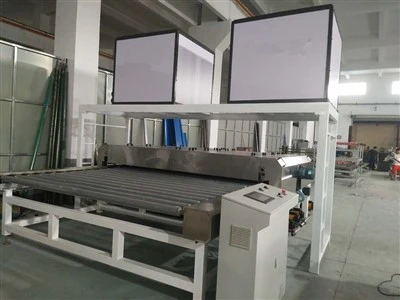
If you’re ready to talk through your specific lamination needs, whether you’re a small boutique shop looking for a benchtop model or a large architectural manufacturer planning a full automated line, reach out to our team to discuss machine specifications, noise levels, and tailored solutions for your production space. We can answer any questions you have about operation noise, safety standards, or our custom noise-reduction features, and help you find the right fit for your business.
Glass Machine Consumables References
- Occupational Safety and Health Administration (OSHA). Noise Exposure Limits. 29 CFR 1910.95.
- American National Standards Institute (ANSI). Specification for Sound Level Meters. S1.4-2014.
- International Organization for Standardization (ISO). Acoustics – Noise Designto Reduce Occupational Noise Exposure. ISO 11690-1:2016.
- Glass Association of North America (GANA). Lamination Equipment Safety and Performance Guidelines. 2022.
- National Institute for Occupational Safety and Health (NIOSH). Noise and Hearing Loss Prevention. Publication No. 2018-127.
Foshan Sky Glass Co., Ltd.
We are one of the most experienced glass lamination machine manufacturers and suppliers in China. With a professional production team, we are able to meet the needs of the majority of our customers. Please feel free to wholesale advanced glass lamination machine for sale here from our factory. Customized orders are welcome.
Address: Jian Mei Business Center, Nan Hai Town, Fo Shan
E-mail: skyglassmanager18@gmail.com
WebSite: https://www.sky-glassdz.com/
