If you’ve ever stood under a car while it’s up on a lift, staring at the maze of metal bars and rubber boots connecting the wheels to the frame, there’s one part that probably stands out once you know what to look for: tie rods. Most folks don’t think about them until something goes wrong—like that weird shimmy in the steering wheel at 60 mph, or when the front end feels loose over potholes. But as someone who’s been in the chassis system game for over a decade (and runs a small supplier that builds these things), let me tell you: tie rods aren’t just tiny metal sticks holding the wheels on. They’re the unsung heroes that make every drive feel stable, safe, and actually predictable. Chassis System
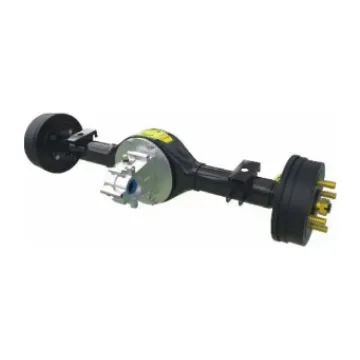
Let’s break this down like I’m explaining it to my cousin who just got his first car and thinks “chassis” is a fancy word for the car’s frame. First off, what even are tie rods? You’ve got two main ones per front wheel (most rear-wheel-drive cars have them too, but we’ll stick to front-wheel-drive since that’s where people notice them most): an inner tie rod that connects to the steering rack, and an outer tie rod end that bolts directly to the steering knuckle—the part that the wheel spins on. Together, they form a straight, adjustable link between the steering system and the wheels. That adjustability is key, by the way. If you’ve ever had an alignment done, the technician twists those tie rod ends to tweak the “toe” of the wheels—how parallel they are to each other. Mess up that adjustment, and your tires will wear out in six months flat, or the car will pull to one side when you let go of the wheel.
Now, here’s the part most drivers don’t get: tie rods do two big jobs at the same time, and they have to nail both or everything falls apart. The first job is steering. When you turn the steering wheel, that motion goes through the steering rack, which pushes or pulls the inner tie rods. Those inner rods then move the outer ones, which pivot the steering knuckle, and boom—your wheels turn. It sounds simple, but think about how much force that takes. If you’re making a tight turn on a highway ramp, the tie rod has to push the wheel hard enough to overcome the tire’s grip on the road. It’s not just a light push; it’s constant, variable force that changes with speed, weight, and road conditions.
The second job is supporting the wheel and handling all the rough stuff that happens between the road and the frame. Potholes, speed bumps, gravel, random chunks of debris—those all jostle the wheels, and the tie rods have to absorb that shock without bending or breaking. That’s why they’re made of high-strength steel, usually with a threaded section and a rubber boot to keep dirt and water out (if that boot tears, the tie rod will get contaminated, seize up, and snap—ask me how I know, from a 2019 batch where a supplier skipped a quality check on those boots). They’re like a long-distance relationship between the steering rack and the wheel: they have to flex a little, move when told, and never, ever quit without warning.
Here’s where my side of the business comes in. I don’t just build tie rods—we test the living daylights out of them. Last month, we ran a test where we shook a tie rod back and forth 10 million times, mimicking 150,000 miles of stop-and-go city driving and highway bumps. If it had failed that test, we’d have thrown the whole batch in the scrap bin, no exceptions. Because if a tie rod fails at 70 mph, it’s not just a flat tire—it’s a crash. I’ve seen it, too: a customer of ours once had a fleet vehicle where an outer tie rod end came loose, and the driver lost control on an icy road. Thankfully no one got hurt, but we took a hard look at our inspection process after that. That’s why we add a tiny stamping on the tie rod’s housing with a batch number—so if there ever is a problem, we can trace it back, fix it, and make sure it never happens again.
A lot of new car guys think electric cars are changing tie rods, and yeah, they are a little. EVs are heavier, so tie rods have to handle more weight—we recently started using a special grade of steel that’s a little lighter but way stronger, to cut down on the car’s total weight and boost range. Also, some EVs have steer-by-wire systems, where there’s no mechanical link between the steering wheel and the wheels at all. Wait, does that mean tie rods are going away? Nah, not anytime soon. Even steer-by-wire systems have a mechanical backup, and most mass-market EVs still use traditional tie rods because they’re reliable and cheap to build. Plus, off-road cars, trucks, even motorcycles? They still need tie rods to turn the wheels. I don’t see them becoming obsolete in my lifetime, and honestly, I don’t want to—this is what I do.
Another thing people don’t talk about: tie rods affect how a car feels to drive. A cheap, flimsy tie rod will make the steering feel “lazy”—you turn the wheel, and the car reacts a half-second later, or it wanders all over the road. A good tie rod, built with precision tolerances (we make sure the threaded sections are off by less than a hair’s width), makes the steering feel tight, responsive, like the car is an extension of your hands. That’s the difference between a $20,000 commuter car and a $50,000 performance car—little stuff like tie rods that no one sees, but everyone feels.
I get it, most people don’t care about parts this small. They just want their car to start, get them to work, and not break down. But the next time you’re driving down a smooth highway, or cruising a backroad without any shimmy in the wheel, take a second to thank the tie rods. They’re working nonstop, 24/7, no fanfare, no complaints. And as a chassis supplier, that’s what we’re here for: to build parts that work so well, you never have to think about them.

If you’re a mechanic looking for reliable replacement parts for your shop, or a car manufacturer needing a partner to supply tie rods for your next model, hit us up. We don’t cut corners, we test every batch, and we’ve been in this long enough to know what actually works on the road. Let’s connect and talk about how we can fit into your chassis system needs.
Smart Fast Charging Cabinet References
- Jazar, R. N. (2017). Vehicle Dynamics: Theory and Application. Springer.
- automotiveaftermarketnews.com. (2022). “The Importance of Tie Rod Ends in Steering and Suspension Systems.”
- Society of Automotive Engineers (SAE). (2021). Standard J1100: Motor Vehicle Dimensions.
Jiangsu Changyun Drive Techniques Co., Ltd.
As one of the leading chassis system manufacturers and suppliers in China, we offer a wide range of products with superior quality. Please rest assured to wholesale advanced chassis system from our factory. If you have any enquiry about cooperation, please feel free to email us.
Address: Building B, 1st Floor, Chuangyan Port, Science and Education City, Wujin District, Changzhou City, Jiangsu Province
E-mail: eva@czbenma.com
WebSite: https://www.cyevenergy.com/
