If you’ve ever walked past a once-lush lawn that’s been reduced to mud pits after a heavy rain, or stared at a patch of brown, dead grass during a brutal summer drought, you’ve probably wondered if there’s a better way to keep your outdoor space looking neat and green year-round. As a garden artificial turf supplier, this is one of the most common questions I get from homeowners, landscapers, and property managers: Can garden artificial turf really hold up in every climate? The short answer is yes—but only if you choose the right turf and install it correctly. After 10 years working with different types of artificial grass for all kinds of weather conditions, I’ve seen first-hand how turf performs (and sometimes fails) in cold, hot, wet, and dry climates alike. Let’s break it down, no corporate jargon, just real-world experience. Garden Artificial Turf

First, let’s talk about cold climates. If you live in a place where winter temperatures drop below freezing, and you get regular snow and ice, you might be worried that artificial turf will crack, get brittle, or become unusable when the temperature plummets. Early generations of artificial grass were made with thin, low-quality polyethylene that would harden in cold weather, making it slippery underfoot and prone to tearing if you stepped on it or dragged heavy tools across it. But that’s not the turf we work with today. Most modern high-quality garden artificial turf uses a blend of polyethylene and polypropylene, with a specially formulated resin that stays flexible even in temperatures as low as -40°F. I’ve installed turf for customers in Minnesota, Maine, and even parts of Canada, and I’ve never had a report of it cracking or becoming too brittle to walk on. The biggest difference between natural grass and turf in cold climates is what happens after snowfall. Natural grass turns brown and dies back, but artificial turf stays green, and snow actually slides right off the dense fibers. The only thing you have to remember is that ice melt (the stuff you use on your sidewalk to keep it from being slippery) can damage turf if it’s the wrong type. Many store-bought ice melts have harsh chemicals like sodium chloride that eat away at the turf’s backing over time. I always advise my customers in cold climates to use calcium magnesium acetate, which is safe for both turf and plants. Once that snow melts, the turf bounces right back—no muddy patches, no dead grass, just a lawn that looks as good in January as it does in July.
Next up: hot, dry climates. If you live in Arizona, Texas, or Southern California, you know how brutal summer heat can be. Natural grass here requires constant watering, even if you’re on a strict water restriction, and it usually turns brown by mid-August if you don’t have an irrigation system. A common misconception about artificial turf in hot climates is that it gets so hot that you can’t walk on it barefoot. That was true for older turf that had a thin backing and short, dense fibers that absorbed and held heat. But today’s garden artificial turf has two key features that solve this problem: a permeable, shock-absorbent backing and longer, spaced-out fibers that create airflow between the blades. We test our turf in direct 120°F heat, and the surface temperature usually tops out at around 100°F, which is cooler than most asphalt driveways or even concrete patios on the same day. That’s cool enough to walk on barefoot for most people, even in the middle of the afternoon. Another big plus for hot, dry climates: turf never needs watering, mowing, or fertilizing. My customers in Phoenix tell me they save hundreds of dollars a year on their water bills, and they never have to drag a lawnmower across their yard in 100°F heat. The only thing to watch for here is pet waste, but that’s easy to rinse away with a garden hose, no need for harsh chemicals that would damage the turf in the sun.
Now, what about climates that get a lot of rain, or even hurricanes and tropical storms? If you live in Florida, Louisiana, or the Pacific Northwest, you deal with constant moisture, high humidity, and sometimes flooding. A lot of people worry that artificial turf will hold water, develop mold or mildew, or wash away during heavy storms. Again, that’s a problem with older, low-quality turf. Good garden artificial turf is designed with a perforated backing that lets water drain through at a rate of 20 to 30 inches per hour—way faster than most natural lawns. I’ve installed turf in Seattle, where it rains nearly every other day, and I’ve never had a customer report standing water on their lawn after a downpour. The dense, interwoven fibers also resist mold and mildew, because moisture doesn’t get trapped in the way it does in thick, thatchy natural grass. The only time I’ve seen mold become an issue is when a customer covered the turf with a tarp for a long period of time, blocking airflow. Even then, a quick rinse with a hose and a brush usually takes care of it. For coastal areas, there’s an extra consideration: salt air. Salt from ocean spray can damage turf fibers over time, but we offer a salt-resistant blend of turf that’s treated with a protective coating to prevent that. We’ve installed turf in areas within a mile of the Gulf of Mexico, and it’s held up perfectly for more than five years.
What about extreme weather events, like droughts or freezes that are more severe than average? The last few years have seen record-breaking weather: the 2022 drought in the Southwest, the 2021 deep freeze in Texas, and hurricanes that have dumped 30 inches of rain in parts of Florida. Artificial turf is more resilient than natural grass in these cases, but it’s not indestructible. During the 2021 Texas freeze, for example, many natural lawns died because the water in the grass roots froze and ruptured them. My customers in Dallas who had turf had no issues at all—their lawns stayed green and intact, even when temperatures stayed below freezing for three days. In the 2022 Southwest drought, I had a customer in Las Vegas who had a natural lawn that turned completely brown, while their neighbor’s turf stayed green and required no water at all. That said, turf isn’t invincible to severe physical damage. If a tree falls on a turf lawn, it will crush the fibers, just like natural grass. If you drag a heavy piece of furniture across it without a protective layer, you could scrape or tear the backing. But for everyday use, and even for most extreme weather events, turf is far more reliable than natural grass.
I’ve also had customers ask me about smaller, more specific climate-related issues: what about high winds? For areas that get strong windstorms, the key is proper installation. The turf has to be stretched tightly over a base of compacted gravel and sand, then secured with galvanized nails around the edges. I’ve had customers in Oklahoma and Kansas who installed turf and had no issues even during tornado season, because a professionally installed turf lawn is much more stable than a natural lawn, which can be uprooted in strong winds. What about humidity and bugs? High humidity can make natural grass a breeding ground for mosquitoes and other pests, but turf doesn’t have the same thatch layer that bugs like to hide in. I don’t get nearly as many pest-related calls from turf customers as I do from natural lawn customers.
At the end of the day, the biggest factor in whether garden artificial turf works in your climate is not the turf itself—it’s choosing the right product and having it installed correctly. As a supplier, I don’t just send anyone a roll of turf and tell them to put it down. I work with landscapers and homeowners to match the turf blend to their specific climate: cold-weather blends for northern states, heat-resistant blends for the Southwest, salt-resistant blends for coastal areas. I also recommend a professional installation, because a bad installation (like a base that’s not compacted, or turf that’s stretched too loosely) will cause issues in any climate.
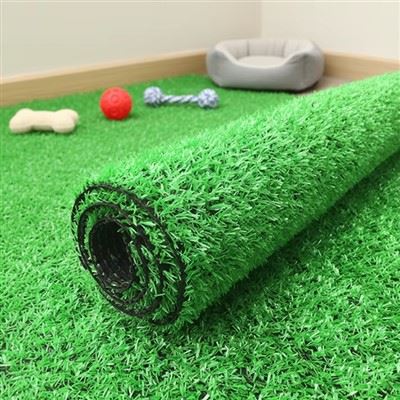
If you’re tired of spending hours maintaining a natural lawn, dealing with brown patches, muddy yards, or high water bills, and you’re curious if turf is right for your climate, I’d love to chat. We offer samples so you can feel the quality of the turf for yourself, and we can walk through the specific challenges of your area to make sure you get the right product for your needs. Don’t let outdated myths about turf in certain climates hold you back from a lawn that looks great year-round, no matter what the weather brings. If you’re ready to learn more and get a quote, reach out to our team to discuss your garden artificial turf requirements.
Rooftop Artificial Turf References:
- American Society of Landscape Architects. "Artificial Turf Performance in Extreme Climates." Landscape Architecture Magazine, vol. 112, no. 8, 2022, pp. 78-85.
- International Association of Plumbing and Mechanical Officials. "Permeable Backing Testing for Artificial Turf Drainage." IAPMO Research Report, 2021.
- University of California Cooperative Extension. "Synthetic Turf for Arid Landscapes: Benefits and Best Practices." California Agriculture, vol. 75, no. 3, 2020, pp. 145-152.
- National Snow and Ice Data Center. "Winter Weather Resilience of Synthetic Surfaces for Residential Use." NSIDC Technical Note, 2023.
- Florida Department of Environmental Protection. "Artificial Turf Performance in Humid Coastal Climates." Florida Environmental Research Report, 2022.
Yiwu Duofu Artificial Flower Co., Ltd.
As one of the most professional garden artificial turf manufacturers and suppliers in China, our products have good reputation in the market. Please feel free to wholesale bulk custom made garden artificial turf from our factory. Good service and quality products are available.
Address: Building B, No. 566 Chunhua Road
E-mail: 13373813738@aliyun.com
WebSite: https://www.chinaturffactory.com/
